
Subtotal: £38.71
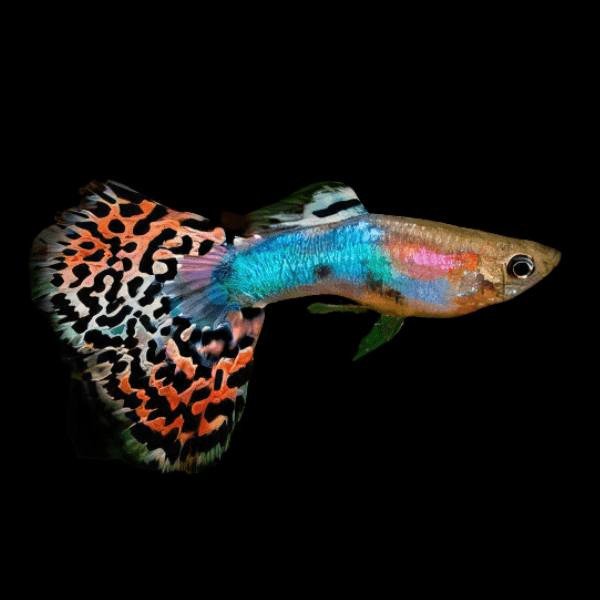
Rainbow Guppy Male – Poecilia reticulata
£5.00
Bring a kaleidoscope of colour to your aquarium with the Rainbow Guppy Male (Poecilia reticulata)! Featuring a dazzling multi-coloured display of blues, oranges, greens, and leopard-patterned tail fins, this spectacular livebearer is a living work of art. Hardy, peaceful, and ideal for community tanks at all experience levels.
Species Introduction
The Rainbow Guppy, scientifically known as Poecilia reticulata, is arguably the most visually spectacular variety of guppy available to aquarists today. True to its name, the Rainbow Guppy Male displays an extraordinary palette of colours across its entire body — electric blues, vivid oranges, shimmering greens, pinks, and golds all blend together in a breathtaking display. The tail fin is particularly stunning, featuring a bold leopard-like pattern of orange and black spots on a broad, fan-shaped canvas. Originating from the tropical waters of Central and South America, this variety has been selectively bred to maximise its incredible multi-coloured appearance. Each individual fish is unique, with its own distinctive pattern and colour combination, making every Rainbow Guppy a one-of-a-kind addition to your tank. Despite their exotic appearance, they retain the hardy, easy-to-care-for nature that makes guppies one of the world’s most popular aquarium fish. Whether you’re new to fishkeeping or a seasoned collector, the Rainbow Guppy Male will be the undisputed star of your aquarium.
Care Requirements Dashboard
Essential Care Guide for Your Rainbow Guppy Male
| Optimal Living Conditions | |
|---|---|
| Water Temperature | 24-27°C (75-81°F) |
| pH Level | 6.8-7.8 |
| Water Hardness | 5-20 dGH |
| Minimum Tank Size | 40L (10 gal) |
| Salinity | Freshwater |
| Care Level | Beginner Friendly |
✓ Care Level: Easy
Feeding & Nutrition
To maintain the extraordinary multi-coloured display of your Rainbow Guppy Male, a high-quality, varied diet is essential. Offer premium tropical flakes with colour-enhancing formulas as a daily staple, supplemented with protein-rich live or frozen foods including brine shrimp, daphnia, micro worms, and bloodworms. Carotenoid-rich foods are particularly important for intensifying the orange, red, and yellow tones, while high-quality proteins support the iridescent blues and greens. Feed small portions 2-3 times daily, ensuring complete consumption within minutes. Spirulina-based flakes provide valuable plant nutrition and help maintain the green and blue shimmers. A consistently varied diet not only supports vibrant colouration but also promotes strong immunity and overall vitality, keeping your Rainbow Guppy looking his absolute best.
Natural Behaviour & Temperament
Rainbow Guppy Males are charismatic, energetic fish that captivate with both their appearance and personality. They are peaceful community fish that thrive alongside other non-aggressive species. Males are confident and sociable, spending much of their time actively swimming through the tank, displaying their multi-coloured fins in elaborate shows that catch the light from every angle. Their natural curiosity drives them to explore all areas of the aquarium, from surface to substrate, making them endlessly entertaining to watch. In groups, Rainbow Guppies create a mesmerising display as they interact and display to one another, each fish showcasing its unique colour combination. They are active throughout the day and prefer a tank with both open swimming areas and planted retreats where they can rest between bouts of energetic exploration.
Tank Setup Guide
The key to showcasing your Rainbow Guppy Male is creating an environment that lets his extraordinary colours take centre stage. A minimum 40-litre tank with a dark or neutral substrate provides the perfect backdrop — darker substrates make the rainbow colouration pop spectacularly. Plant generously with Java Fern, Anubias, Hornwort, and Vallisneria for natural beauty and shelter. Floating plants like Amazon Frogbit create dappled lighting effects that highlight different colour facets as the fish moves through light and shadow. Gentle filtration maintains water quality without creating excessive current. A reliable heater set to 24-27°C ensures tropical comfort. Quality LED lighting on a 10-12 hour cycle is essential — it brings out the full spectrum of iridescent blues, greens, oranges, and pinks that make this variety so extraordinary. Perform 20-30% weekly water changes for optimal health and colour vibrancy.
Compatibility Guide
Rainbow Guppy Males are excellent community fish that complement a wide range of peaceful species. Perfect tank mates include Neon and Cardinal Tetras, Corydoras Catfish, Endler’s Livebearers, Harlequin Rasboras, Cherry Barbs, Otocinclus, and peaceful invertebrates like Cherry Shrimp and Amano Shrimp. Avoid housing with fin-nipping species such as Tiger Barbs or Serpae Tetras — the Rainbow Guppy’s flowing fins make tempting targets. Larger aggressive fish should also be avoided. Multiple males can coexist peacefully in suitably sized tanks, and a group of Rainbow Guppies swimming together creates one of the most colourful displays in the freshwater hobby. Always quarantine new tank mates before introduction to protect your community.
Health & Wellness
A healthy Rainbow Guppy is a colourful Rainbow Guppy — fading colours are often the first sign that something is amiss. Regular monitoring of water parameters including temperature, pH, ammonia, nitrite, and nitrate is your best defence against health problems. Stable conditions are paramount; fluctuations trigger stress that dulls colouration and weakens immunity. Watch for common ailments including ich, fin rot, and velvet disease. Early warning signs include clamped fins, lethargy, loss of appetite, and colour loss. Quarantine affected fish immediately and address the root cause. A well-maintained tank with consistent water changes, proper filtration, and a nutrient-rich varied diet supports a healthy 2-3 year lifespan filled with vibrant, rainbow-coloured displays.
Acclimation Process
Gentle acclimation is essential to ensure your new Rainbow Guppy Male transitions smoothly into your aquarium without losing colour vibrancy. Float the sealed bag in your tank for 15-20 minutes to equalise temperature. Gradually introduce small amounts of tank water every 5 minutes over 30-45 minutes to adjust water chemistry. Transfer using a soft net — never add transport water to your tank. Dim the lights for several hours and skip the first feeding to minimise stress. Over the following days, you’ll see your Rainbow Guppy’s colours intensify as he settles in and feels secure. Providing plenty of plant cover accelerates the settling process and encourages confident, colourful behaviour.
Frequently Asked Questions
Q: What makes the Rainbow Guppy different from other guppy varieties?
The Rainbow Guppy displays an extraordinary combination of multiple colours — blues, oranges, greens, pinks, and golds — all on a single fish. Combined with a bold leopard-patterned tail, each individual is unique, making them one of the most visually diverse and striking guppy varieties available.
✓ Expert Tip
Quality LED lighting brings out the full iridescent spectrum of colours.
Q: Are Rainbow Guppies suitable for beginners?
Yes! Despite their exotic appearance, Rainbow Guppies are just as hardy and easy to care for as any other guppy variety. They are adaptable, peaceful, and forgiving of minor care mistakes — perfect for newcomers while still impressing experienced aquarists.
✓ Expert Tip
A fully cycled, well-planted tank gives them the best start.
Q: How do I keep the colours vibrant?
Three factors drive colour vibrancy: diet, water quality, and stress levels. Feed colour-enhancing foods rich in carotenoids, maintain pristine water conditions with regular changes, and provide a secure environment with plenty of plants and hiding spots. Good LED lighting also makes a dramatic difference in how the colours appear.
✓ Expert Tip
Dark substrates create maximum contrast and make rainbow colours pop.
Q: What are the best tank mates?
Neon Tetras, Corydoras Catfish, Endler’s Livebearers, Rasboras, Cherry Barbs, and peaceful shrimp all make excellent companions. Avoid fin-nippers and aggressive species.
✓ Expert Tip
A group of Rainbow Guppies together creates one of the most colourful freshwater displays possible.
Q: How long do Rainbow Guppies live?
With optimal care, Rainbow Guppies live 2-3 years. Consistent water quality, a varied nutrient-rich diet, and a stress-free environment are the keys to a long, colourful life.
✓ Expert Tip
Weekly water changes are the single best thing you can do for longevity and colour.
Be the first to review “Rainbow Guppy Male – Poecilia reticulata”
Related products


Out of stock



Price range: £16.45 through £49.34
This product has multiple variants. The options may be chosen on the product page

Reviews
There are no reviews yet.