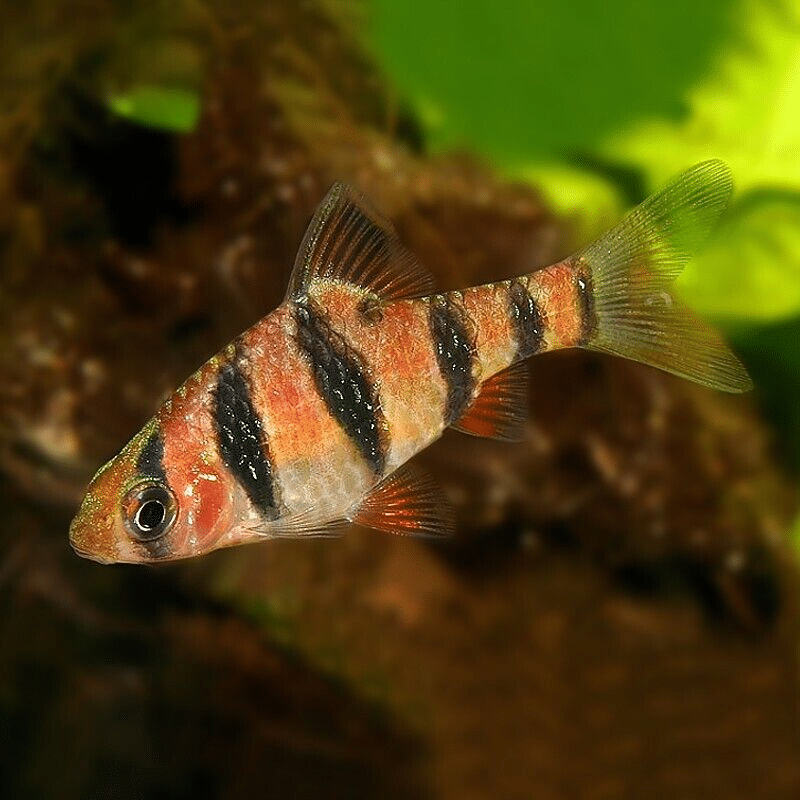
10 X Five-Banded Barb – Desmopuntius Pentazona – Cyprinid Fish
Original price was: £30.99.£26.13Current price is: £26.13.
Welcome these beautiful 10 X Five-Banded Barbs, also known as Desmopuntius Pentazona, to your aquarium! Their vibrant colors and graceful movements make them stunning community members. Ideal for beginners, these peaceful fish thrive in well-maintained environments with proper filtration.
In stock


Species Introduction
The Five-Banded Barb, scientifically known as Puntius pentazona, is a captivating species of freshwater fish belonging to the Cyprinidae family. Originating from the lush waters of Southeast Asia, particularly in countries like Malaysia and Indonesia, these fish thrive in slow-moving rivers and streams, where they find shelter among dense aquatic vegetation. Their natural habitat is characterized by soft, slightly acidic water, which plays a crucial role in their health and well-being.
As a schooling fish, the Five-Banded Barb exhibits a delightful array of colors and patterns, making them a popular choice among aquarists. Their vibrant stripes and lively behavior add a dynamic presence to any aquarium, making them not just fish but true aquatic companions that enhance the beauty of your underwater landscape.
Essential Care Guide for Your 10 X Five-Banded Barbs – Desmopuntius Pentazona – Cyprinid Fish
| Optimal Living Conditions | |
|---|---|
| Water Temperature | 24-27°C (75-81°F) |
| pH Level | 6.5-7.5 |
| Water Hardness | 4-12 dKH |
| Minimum Tank Size | 80L (20 gal) |
| Salinity | Freshwater |
| Care Level | Beginner Friendly |
✓ Care Level: Easy
Tank Size: Minimum 20 gallons
Water Temperature: 22-28°C (72-82°F)
pH Level: 6.5-7.5
Hardness: 5-15 dGH
Caring for Five-Banded Barbs is relatively straightforward, making them an excellent choice for beginners. They prefer a minimum tank size of 20 gallons, which allows them ample space to swim and socialize. Maintaining a stable water temperature between 22-28°C (72-82°F) is essential, as fluctuations can stress these fish. The pH level should be kept between 6.5 and 7.5, with a hardness range of 5-15 dGH to mimic their natural environment. Regular water changes and proper filtration will help maintain optimal water quality, ensuring your aquatic friends remain healthy and vibrant.
Natural Behavior & Temperament
Five-Banded Barbs are known for their active and social nature. They thrive in groups, and it is recommended to welcome these beautiful creatures in schools of at least six individuals to promote their natural behavior. In a community tank, these fish exhibit playful swimming patterns, often darting around and exploring their environment. Their social dynamics are fascinating to observe, as they establish pecking orders and engage in friendly interactions. While generally peaceful, they can display territorial behavior during breeding or when confined in smaller spaces. Providing plenty of hiding spots and open swimming areas will help reduce stress and allow for natural behaviors to flourish.
Tank Setup Guide
Creating an ideal environment for Five-Banded Barbs involves replicating their natural habitat as closely as possible. Start with a spacious aquarium, ideally 20 gallons or larger, and consider using a substrate that mimics the riverbed, such as fine gravel or sand. Incorporate plenty of live plants, such as Java fern or Anubias, which provide hiding spots and contribute to the overall aesthetics of the tank. Driftwood and rocks can also be added to create visual interest and offer additional shelter. Ensure that the tank has a good filtration system to maintain water quality, as these fish thrive in clean, well-oxygenated water. A gentle water current will mimic their natural habitat, so consider using a filter that provides both filtration and water movement.
Water Quality Management
✓ Good Water Quality is Essential
pH Level: 6.5-7.5
Temperature: 22-28°C (72-82°F)
Hardness: 5-15 dGH
Maintaining water quality is crucial for the health and longevity of Five-Banded Barbs. Regular testing for pH, temperature, and hardness is recommended to ensure that conditions remain stable. The ideal pH range for these fish is between 6.5 and 7.5, which mimics their natural habitat. Temperature should be kept between 22-28°C (72-82°F) to promote optimal metabolic function. Hardness levels should be maintained between 5-15 dGH, providing a suitable environment for these fish. Regular water changes, typically 25% weekly, will help remove toxins and replenish essential minerals, ensuring a healthy living environment.
Feeding & Nutrition
✓ Omnivorous Diet
Feeding Schedule: 2-3 times a day
Food Types: Flake food, pellets, live or frozen food
Five-Banded Barbs are omnivorous fish, meaning they thrive on a varied diet that includes both plant and animal matter. A balanced diet is essential for their health, growth, and vibrant coloration. High-quality flake food or pellets designed for tropical fish should form the basis of their diet, supplemented with live or frozen foods such as brine shrimp, daphnia, or bloodworms. Feeding should occur 2-3 times a day, with only as much food as they can consume in a few minutes to prevent overfeeding and maintain water quality. Providing a diverse diet will enhance their health and vitality, ensuring that they remain active and colorful.
Compatibility Guide
✓ Community Tank Friendly
Compatible Tank Mates: Tetras, Gouramis, Rasboras
⚠ Avoid: Larger, aggressive fish
Five-Banded Barbs are generally peaceful and make excellent additions to community tanks. They can coexist harmoniously with other small to medium-sized fish such as tetras, gouramis, and rasboras. However, it is essential to avoid pairing them with larger or more aggressive species, as this can lead to stress and potential harm. When introducing new tank mates, monitor their interactions closely to ensure a peaceful environment. Keeping them in groups of six or more will help distribute aggression and enhance their social behavior, creating a lively and dynamic aquarium.
Health & Wellness
✓ Signs of Healthy Fish
Active swimming, bright colors, clear eyes
⚠ Common Issues: Ich, fin rot
Monitoring the health of your Five-Banded Barbs is crucial for their well-being. Healthy fish are characterized by active swimming, bright coloration, and clear eyes. Regular observation is essential to catch any signs of illness early. Common health issues include ich (white spot disease) and fin rot, which can be exacerbated by poor water quality or stress. Maintaining optimal tank conditions, including regular water changes and proper filtration, will help prevent these issues. If you notice any signs of illness, such as lethargy, loss of appetite, or abnormal swimming patterns, it is vital to act quickly to address the problem and seek appropriate treatment.
Breeding Information
✓ Breeding Conditions
Spawning Tank: Separate breeding tank with soft water
Fry Care: Infusoria or finely crushed flakes
Breeding Five-Banded Barbs can be a rewarding experience for aquarists. To encourage spawning, it is recommended to set up a separate breeding tank with soft, slightly acidic water. The presence of fine-leaved plants will provide suitable spawning sites. During the breeding process, males will display vibrant colors and engage in courtship behaviors. After spawning, it is essential to remove the parents, as they may consume the eggs. The eggs typically hatch within 24-36 hours, and the fry should be fed infusoria or finely crushed flakes until they are large enough to accept regular food. Proper care during this stage is crucial for the survival and growth of the young fish.
Acclimation Process
When introducing Five-Banded Barbs to a new aquarium, proper acclimation is essential to minimize stress and ensure a smooth transition. Begin by floating the sealed bag containing the fish in the aquarium for about 15-20 minutes, allowing the temperature to equalize. After this, gradually mix small amounts of tank water into the bag every 5 minutes for about 30 minutes. This process helps the fish adjust to the new water parameters. Once acclimated, gently release the fish into the aquarium using a net, avoiding adding bag water to the tank to prevent introducing any contaminants. Monitoring their behavior closely during the first few days will help ensure they adapt well to their new home.
Long-term Care
Five-Banded Barbs have a lifespan of approximately 5-7 years when provided with optimal care. As they grow, it is essential to monitor their health and adjust their environment as needed. Regular water changes, proper feeding, and maintaining suitable tank mates are crucial for their long-term health. These fish will continue to thrive in a well-maintained aquarium, exhibiting their vibrant colors and lively behavior. Keeping a close eye on their growth and health will allow you to enjoy their companionship for many years to come.
Natural Habitat Recreation
To recreate the natural habitat of Five-Banded Barbs, consider incorporating elements that mimic their native environment. Use a substrate of fine gravel or sand, and add plenty of live plants to provide hiding places and create a lush underwater landscape. Driftwood and rocks can also be strategically placed to enhance the aesthetic appeal and provide additional shelter. Maintaining a gentle water flow will help simulate their natural habitat, allowing them to exhibit their natural swimming behavior. The goal is to create a serene environment that promotes their well-being and allows them to thrive.
Seasonal Care Adjustments
Seasonal changes can impact the care of your Five-Banded Barbs, particularly regarding temperature and lighting. During warmer months, ensure that the water temperature remains stable and does not exceed 28°C (82°F). In colder months, consider using a heater to maintain optimal temperatures. Additionally, adjusting the lighting schedule to mimic natural daylight cycles can help promote healthy growth and behavior. Regular monitoring of water parameters during seasonal transitions is essential to ensure that your aquatic companions remain healthy and vibrant.
Expert Tips
For those looking to provide the best care for their Five-Banded Barbs, consider the following expert tips: Maintain a consistent feeding schedule to promote healthy growth and coloration. Regularly test water parameters to ensure stability, and perform routine maintenance to keep the tank clean. Incorporate a variety of foods into their diet to enhance their nutritional intake and overall health. Lastly, observe their social interactions and adjust tank mates as necessary to ensure a harmonious community. By following these tips, you can create an optimal environment for your Five-Banded Barbs to thrive and flourish.
Troubleshooting
In the event of common issues with your Five-Banded Barbs, such as signs of stress or illness, it is crucial to take immediate action. If you notice lethargy, loss of appetite, or abnormal swimming patterns, check water parameters to ensure they are within the recommended ranges. If signs of illness, such as white spots or frayed fins, are present, consider isolating affected fish and treating them in a separate tank. Maintaining a clean and well-maintained aquarium will help prevent many common issues and promote the overall health of your fish friends.
Scientific Background
The Five-Banded Barb, Puntius pentazona, is part of the diverse Cyprinidae family, which includes many popular freshwater species. This species is known for its striking appearance and active behavior, making it a favorite among aquarists. Research into their natural habitats has revealed important insights into their care requirements, including water quality and dietary needs. Conservation efforts are also in place to protect their natural habitats, ensuring that future generations can enjoy these beautiful fish. Understanding their scientific background can enhance your appreciation for these aquatic companions and guide you in providing the best care possible.
Advanced Care Techniques
For experienced aquarists looking to take their care of Five-Banded Barbs to the next level, consider implementing advanced techniques such as breeding programs or biotope aquariums. Creating a biotope that closely resembles their natural habitat can enhance their well-being and provide a unique aesthetic. Additionally, breeding programs can contribute to conservation efforts and allow you to observe fascinating behaviors during the spawning process. Regularly engaging with the latest research and advancements in fish care will help you provide the best possible environment for your Five-Banded Barbs, ensuring they thrive for years to come.
Water Quality Parameters
Optimal Range
24-27°C
6.5-7.5
0 ppm
Caution Zone
22-24°C or 27-29°C
6.0-6.5 or 7.5-8.0
0.25-0.5 ppm
Danger Zone
<22°C or >29°C
<6.0 or >8.0
>0.5 ppm
Monitoring Tip: Test water parameters weekly and perform regular water changes to maintain optimal conditions for your aquatic friends!
Frequently Asked Questions
Q: What tank size is required for Five-Banded Barbs?
Five-Banded Barbs, scientifically known as Desmopuntius pentazona, thrive best in a tank of at least 75 litres (20 gallons). This size ensures that they have ample swimming space, which is crucial for their activity levels and overall well-being. Moreover, a larger tank helps to maintain stable water parameters, reducing stress among these social fish. Ideally, consider a tank with a minimum length of 90 cm (35 inches) to allow for their schooling behaviour. Remember, these fish prefer to be in groups of six or more, hence, a larger tank will accommodate their social nature and prevent territorial disputes.
✓ Expert Tip
Ensure that the tank is well-planted with open swimming space to replicate their natural habitat.
Q: What water parameters do Five-Banded Barbs require?
Five-Banded Barbs prefer slightly acidic to neutral water conditions, ideally with a pH range of 6.5 to 7.5. The water hardness should be between 5 to 15 dGH, providing a comfortable environment for them. Additionally, maintaining a temperature between 24°C to 28°C (75°F to 82°F) is crucial for their health. Regular water changes of about 25% weekly will help maintain these parameters and ensure a healthy environment. It is also beneficial to use a good quality water conditioner to remove harmful chemicals from tap water.
✓ Expert Tip
Use a reliable water testing kit to regularly monitor pH, ammonia, and nitrate levels.
Q: How often should I feed Five-Banded Barbs?
Five-Banded Barbs are active feeders and should be fed two to three times a day. It is advisable to provide small amounts of high-quality flake food, pellets, and occasional live or frozen foods like brine shrimp or daphnia. Ensure that the food is consumed within a few minutes to prevent overfeeding, which can lead to water quality issues. Regular feeding not only supports their growth but also enhances their colouration and overall health.
✓ Expert Tip
Vary their diet to include both dry and wet foods for optimal nutrition.
Q: What are the best tank mates for Five-Banded Barbs?
Five-Banded Barbs are generally peaceful and sociable fish, making them suitable for community tanks. They pair well with other small to medium-sized fish such as Tetras, Rasboras, and Gouramis. Avoid aggressive species or those that may nip at their fins. These fish thrive in groups, so it is recommended to keep at least six together to promote natural schooling behaviour. Ensure that any potential tank mates have similar water parameter needs to maintain harmony within the aquarium.
✓ Expert Tip
Introduce new fish gradually to avoid territorial disputes.
Q: How do I properly acclimatise Five-Banded Barbs to my aquarium?
Acclimatisation is crucial for reducing stress in Five-Banded Barbs. Start by floating the sealed bag containing the fish in your aquarium for about 15-20 minutes to equalise the temperature. Then, gradually introduce small amounts of aquarium water into the bag every 5-10 minutes for an hour. This slow process allows the fish to adapt to the new water conditions. After an hour, gently transfer the fish into the aquarium using a net, avoiding adding bag water to the tank.
✓ Expert Tip
Limit handling time to minimise stress during the acclimatisation process.
Q: What are the signs of healthy Five-Banded Barbs?
Healthy Five-Banded Barbs exhibit vibrant colours, clear eyes, and active swimming behaviour. They should be socialising with other fish and not hiding excessively. Signs of stress or illness may include faded colours, lethargy, or abnormal swimming patterns. Regular monitoring of water parameters and observing their behaviour can help in early disease detection. Maintaining a proper diet and clean environment will also contribute to their overall health.
✓ Expert Tip
Regularly check for any signs of disease, such as white spots or fin rot.
Q: How do I successfully breed Five-Banded Barbs?
Breeding Five-Banded Barbs can be a rewarding experience. To encourage breeding, set up a separate breeding tank with soft, acidic water and plenty of fine-leaved plants for egg laying. The temperature should be slightly elevated to around 28°C (82°F). Introduce a group of mature fish, as males will display courtship behaviour towards females. After spawning, remove the adults to prevent them from eating the eggs. The eggs typically hatch within 24-48 hours, and the fry should be fed infusoria or powdered food until they are large enough to accept regular flake food.
✓ Expert Tip
Ensure the breeding tank is well-maintained to promote healthy fry development.
Q: What temperature should I maintain for Five-Banded Barbs?
The ideal temperature range for Five-Banded Barbs is between 24°C to 28°C (75°F to 82°F). Maintaining a consistent temperature is vital for their health and behaviour. Sudden fluctuations can lead to stress and susceptibility to diseases. A reliable aquarium heater with a thermometer will help in keeping the temperature stable. It is also advisable to monitor the temperature regularly, especially during seasonal changes, to ensure a comfortable environment for your fish friends.
✓ Expert Tip
Position the heater near a water flow source to ensure even heating throughout the tank.
Q: How long do Five-Banded Barbs typically live in captivity?
With proper care, Five-Banded Barbs can live for approximately 5 to 7 years in captivity. Their lifespan can be influenced by various factors such as water quality, diet, and overall tank conditions. Regular maintenance, including water changes and monitoring water parameters, is essential for promoting their longevity. Additionally, a well-balanced diet and minimising stress through stable conditions can significantly enhance their quality of life.
✓ Expert Tip
Keep track of their behaviour and health to ensure they thrive throughout their lifespan.
Q: What type of substrate is most suitable for Five-Banded Barbs?
Five-Banded Barbs prefer a substrate that mimics their natural habitat, which typically consists of sandy or fine gravel substrates. This type of substrate is gentle on their bodies and allows for natural foraging behaviour. Avoid sharp-edged substrates that could injure their delicate fins. Additionally, incorporating a mix of live plants and decorations can enhance their environment and provide hiding spots, contributing to their overall comfort and well-being.
✓ Expert Tip
Consider adding smooth stones or driftwood to create a more natural environment.
Q: What behavioural patterns should I expect from Five-Banded Barbs?
Five-Banded Barbs are known for their active and playful behaviour. They enjoy swimming in schools, often darting around the tank, which is a natural instinct. These fish are generally peaceful but may exhibit some territorial behaviour during breeding or when establishing dominance. Observing their interactions can be quite entertaining, as they engage in social displays and sometimes chase each other. Ensuring a well-planted tank with open swimming areas will help minimise stress and promote natural behaviours.
✓ Expert Tip
Provide plenty of hiding spots to help reduce potential stress and aggression.
Q: How can I prevent common diseases in Five-Banded Barbs?
Preventing diseases in Five-Banded Barbs begins with maintaining optimal water quality. Regular water changes and monitoring parameters such as pH, ammonia, and nitrate levels are essential. Avoid overfeeding and ensure that any uneaten food is promptly removed. Quarantining new fish before introducing them to the main tank can prevent the spread of diseases. Additionally, providing a balanced diet and reducing stress through proper tank conditions will enhance their immune system, making them less susceptible to illness.
✓ Expert Tip
Regularly observe your fish for any signs of illness or distress.
Q: What lighting conditions do Five-Banded Barbs prefer?
Five-Banded Barbs thrive in moderate lighting conditions. They do well with a mix of natural and artificial light, which helps to promote plant growth and enhances their natural colours. Aim for a light cycle of around 10 to 12 hours a day to mimic their natural habitat. Too much intense lighting can cause stress and increase algae growth, whilst insufficient light can affect plant health. Using LED lights with adjustable intensity can provide the perfect balance for your aquarium.
✓ Expert Tip
Consider using floating plants to diffuse light and create shaded areas in the tank.
Q: How do I recognise stress in Five-Banded Barbs?
Signs of stress in Five-Banded Barbs may include excessive hiding, lack of appetite, and abnormal swimming patterns such as darting or lethargy. They may also exhibit faded colours or clamped fins. Stress can arise from poor water quality, overcrowding, or aggressive tank mates. Regular monitoring of their behaviour and environment is crucial to identify these signs early. If you notice any of these symptoms, consider checking water parameters and ensuring a suitable tank environment.
✓ Expert Tip
Provide hiding spots and reduce noise around the tank to help alleviate stress.
Q: What natural habitat conditions should I replicate for Five-Banded Barbs?
To replicate the natural habitat of Five-Banded Barbs, aim for a tank that mimics their native rivers and streams. This can be achieved by providing plenty of plants, driftwood, and rocks to create hiding spots and swimming areas. The substrate should be soft and sandy, and the water should be slightly acidic to neutral. Incorporating gentle water flow using a filter can also help to simulate their natural environment, promoting their natural behaviour and overall health.
✓ Expert Tip
Use a variety of plants to create a natural-looking aquascape that enhances their habitat.
1 review for 10 X Five-Banded Barb – Desmopuntius Pentazona – Cyprinid Fish
Add a review
Related products





Emily Carter (verified owner) –
I recently added 10 Five-Banded Barbs to my community tank, and I couldn’t be happier with my purchase! These tropical fish are not only stunning with their vibrant colors, but they also bring such life to the aquarium. It’s been about two months since I introduced them, and they’ve settled in beautifully among my aquarium plants, darting around playfully in their schooling behavior. I’ve kept various barbs before, but the Five-Banded Barbs are truly special; they’re more active and social than others I’ve had, making them a joy to watch.
The shipping was prompt, and they arrived healthy and lively, which speaks volumes about the seller’s commitment to fish welfare. My only minor concern is that they can get a bit nippy with smaller tank mates, so I recommend keeping them with other larger, peaceful fish. Overall, I wholeheartedly recommend these barbs for anyone looking to liven up their aquarium! They’re perfect for both beginner and experienced hobbyists who appreciate a vibrant and dynamic school of fish.